Gifford Park and Its Namesake
 |
| |
 |
| |
 |
| |
 |
| |
 |
| |
 |
| |
 |
| |
 |
| |
 |
| |
 |
| |
 |
| |
 |
| |
 |
| |
 |
| |
 |
| |
 |
| |
 |
| |
 |
| |
 |
| |
 |
| |
 |
| |
 |
| |
 |
| |
 |
Gifford Park takes its name from Dr. Harold
Gifford, Sr. who donated the property to the
City of Omaha in 1912 and added to it in
1916. He was an ophthalmologist, amateur
naturalist, hotel builder, socialist, agnostic,
and philanthropist. He was born in
Milwaukee in 1859 and came to Omaha in
1886 to marry his college roommate’s sister,
Mary Louise Millard. The roommate was
Alfred Millard, son of Ezra Millard, a land
developer and banker for whom the town of
Millard was named. Dr. Gifford received
degrees from Cornell University and the
University of Michigan. He studied abroad in
Erlangen, Heidelberg, and Zurich.
Gifford, Sr. who donated the property to the
City of Omaha in 1912 and added to it in
1916. He was an ophthalmologist, amateur
naturalist, hotel builder, socialist, agnostic,
and philanthropist. He was born in
Milwaukee in 1859 and came to Omaha in
1886 to marry his college roommate’s sister,
Mary Louise Millard. The roommate was
Alfred Millard, son of Ezra Millard, a land
developer and banker for whom the town of
Millard was named. Dr. Gifford received
degrees from Cornell University and the
University of Michigan. He studied abroad in
Erlangen, Heidelberg, and Zurich.
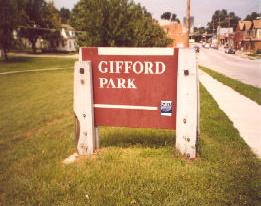
33rd Street
Dr. Gifford was a founder of the Methodist Hospital and among the organizers of the
Omaha Medical College, a forerunner of the Nebraska Medical Center. He was dean of
the school and head of the Medical College’s Department of Ophthalmology for 25 years.
He did eye research, wrote scientific articles in both French and German and developed
surgical tecniques which brought worldwide recognition.
Dr. Gifford’s son, Hal, also an ophthalmologist, said his father wouldn’t tolerate idleness.
He would say, “Why don’t you do something with your time.”
Omaha Medical College, a forerunner of the Nebraska Medical Center. He was dean of
the school and head of the Medical College’s Department of Ophthalmology for 25 years.
He did eye research, wrote scientific articles in both French and German and developed
surgical tecniques which brought worldwide recognition.
Dr. Gifford’s son, Hal, also an ophthalmologist, said his father wouldn’t tolerate idleness.
He would say, “Why don’t you do something with your time.”
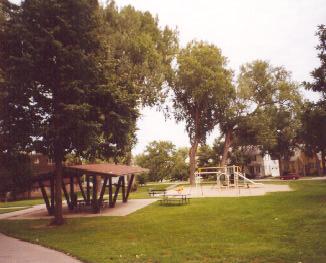
Picnic area and playground,
Gifford Park
Gifford Park
Indeed, Dr. Giffford, Sr. did something with his time. Besides his medical work, he loved
nature and the whole outdoors. His first Omaha home was at 420 South 36th Street, but in
1925 Mrs. Gifford designed the home at 3636 Burt and the family moved into our
neighborhood. The Giffords spent their summers at their farm ten miles north of Omaha
near Nashville. The farm was accessible by a Chicago and North Western train, which
could be boarded in downtown Omaha. Occasionally, the doctor would drive his Stanley
Steamer to Nashville.
“Memory Farm,” as they called it, contained a nine-hole golf course where cattle ranged
to keep the grass down, a tennis court, and one of the first private swimming pools in the
state. Dr. Gifford filled the rooms of the farmhouse with books and Victorian furniture. It
was lighted by candles and oil lamps.
The Giffords traveled frequently. On one trip to British Guiana he and a colleague from
Chicago gathered information for a scientific book called the “Reptilian Eye.”
Dr. Gifford foresaw the need for preserving natural areas. He was one of the founders of
Fontenelle Forest and donated much of the land. He invented the method of rip-rapping
to control erosion along the Missouri River. He worked to develop a riverfront drive, and
although the road wasn’t built, the effort resulted in the present Mandan Park and Mt.
Vernon Gardens. His interest in parks extended to the gift of land for Gifford Park at 33rd
and Cass Streets.
As a businessman, Dr. Gifford invested in hotels and property. He built the Castle Hotel at
16th and Jones and the Sanford, later called the Conant, at 19th and Farnam.
Mrs. Gifford was socially minded. She worked with the Social Settlement in South Omaha,
and she and her husband aided the Red Cross, raised money for Serbian relief and gave
to many charitable and civic organizations. There were four children in the family.
Dr. Gifford died of a heart attack in 1929 at age 71.
Source
Omaha World-Herald, May 8, 1975
nature and the whole outdoors. His first Omaha home was at 420 South 36th Street, but in
1925 Mrs. Gifford designed the home at 3636 Burt and the family moved into our
neighborhood. The Giffords spent their summers at their farm ten miles north of Omaha
near Nashville. The farm was accessible by a Chicago and North Western train, which
could be boarded in downtown Omaha. Occasionally, the doctor would drive his Stanley
Steamer to Nashville.
“Memory Farm,” as they called it, contained a nine-hole golf course where cattle ranged
to keep the grass down, a tennis court, and one of the first private swimming pools in the
state. Dr. Gifford filled the rooms of the farmhouse with books and Victorian furniture. It
was lighted by candles and oil lamps.
The Giffords traveled frequently. On one trip to British Guiana he and a colleague from
Chicago gathered information for a scientific book called the “Reptilian Eye.”
Dr. Gifford foresaw the need for preserving natural areas. He was one of the founders of
Fontenelle Forest and donated much of the land. He invented the method of rip-rapping
to control erosion along the Missouri River. He worked to develop a riverfront drive, and
although the road wasn’t built, the effort resulted in the present Mandan Park and Mt.
Vernon Gardens. His interest in parks extended to the gift of land for Gifford Park at 33rd
and Cass Streets.
As a businessman, Dr. Gifford invested in hotels and property. He built the Castle Hotel at
16th and Jones and the Sanford, later called the Conant, at 19th and Farnam.
Mrs. Gifford was socially minded. She worked with the Social Settlement in South Omaha,
and she and her husband aided the Red Cross, raised money for Serbian relief and gave
to many charitable and civic organizations. There were four children in the family.
Dr. Gifford died of a heart attack in 1929 at age 71.
Source
Omaha World-Herald, May 8, 1975
| Gifford Park Neighborhood Association P.O. Box 31462, Omaha, NE 68131-0462 |
| Gifford Park History Book |